Kelp loss:
Oregon has seen dramatic declines in kelp forest coverage since 2012, with ~900 acres (⅔ of the kelp forests in the state) lost. This is primarily attributed to over-grazing of kelp by sea urchins, particularly purple urchins. Since the decline, former kelp forests have persistently transformed into urchin barrens, with impacts to coastal ecosystems, fisheries, and communities.
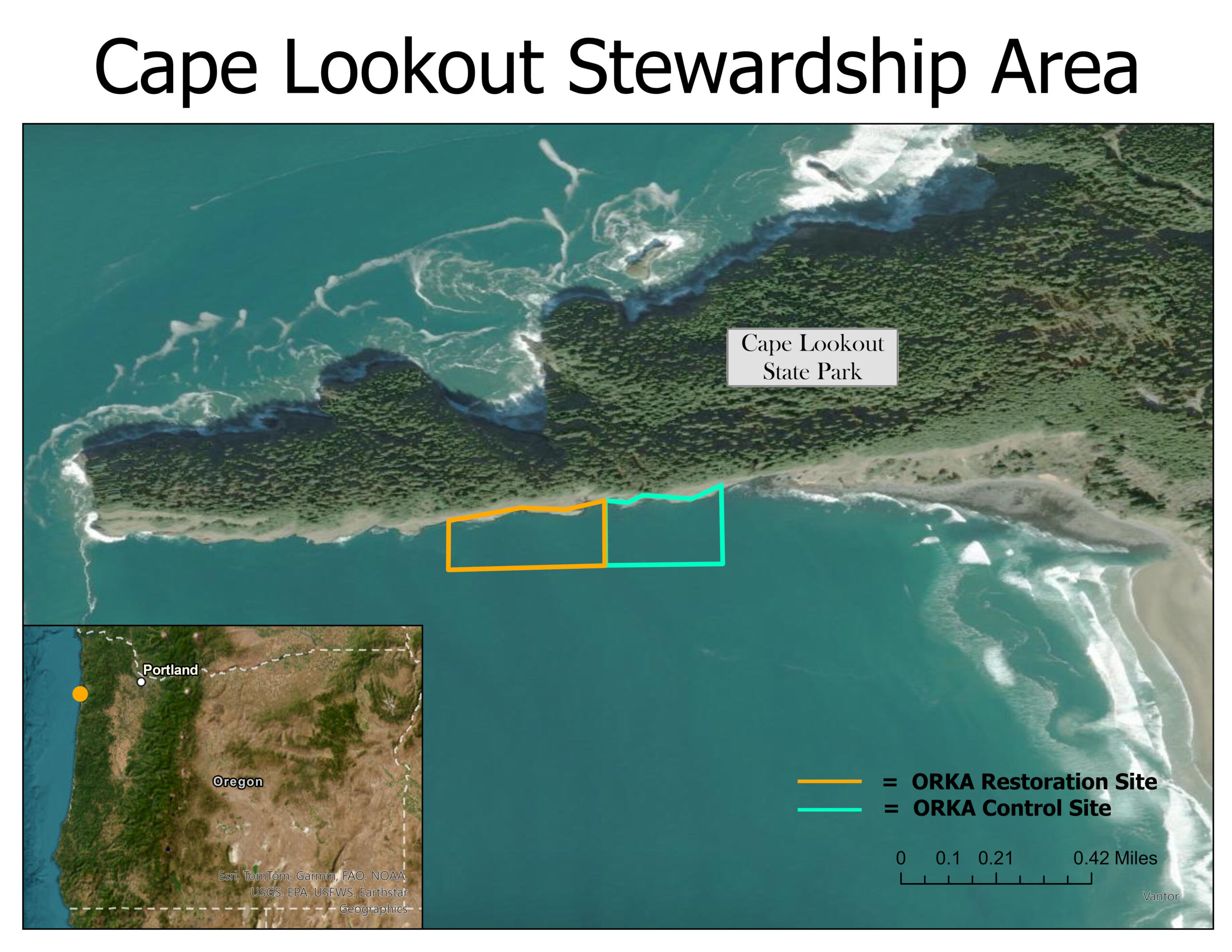
Cape Lookout
- Purples culled this year: 20700
- Reds culled this year: 83
- Total culled this year: 20783
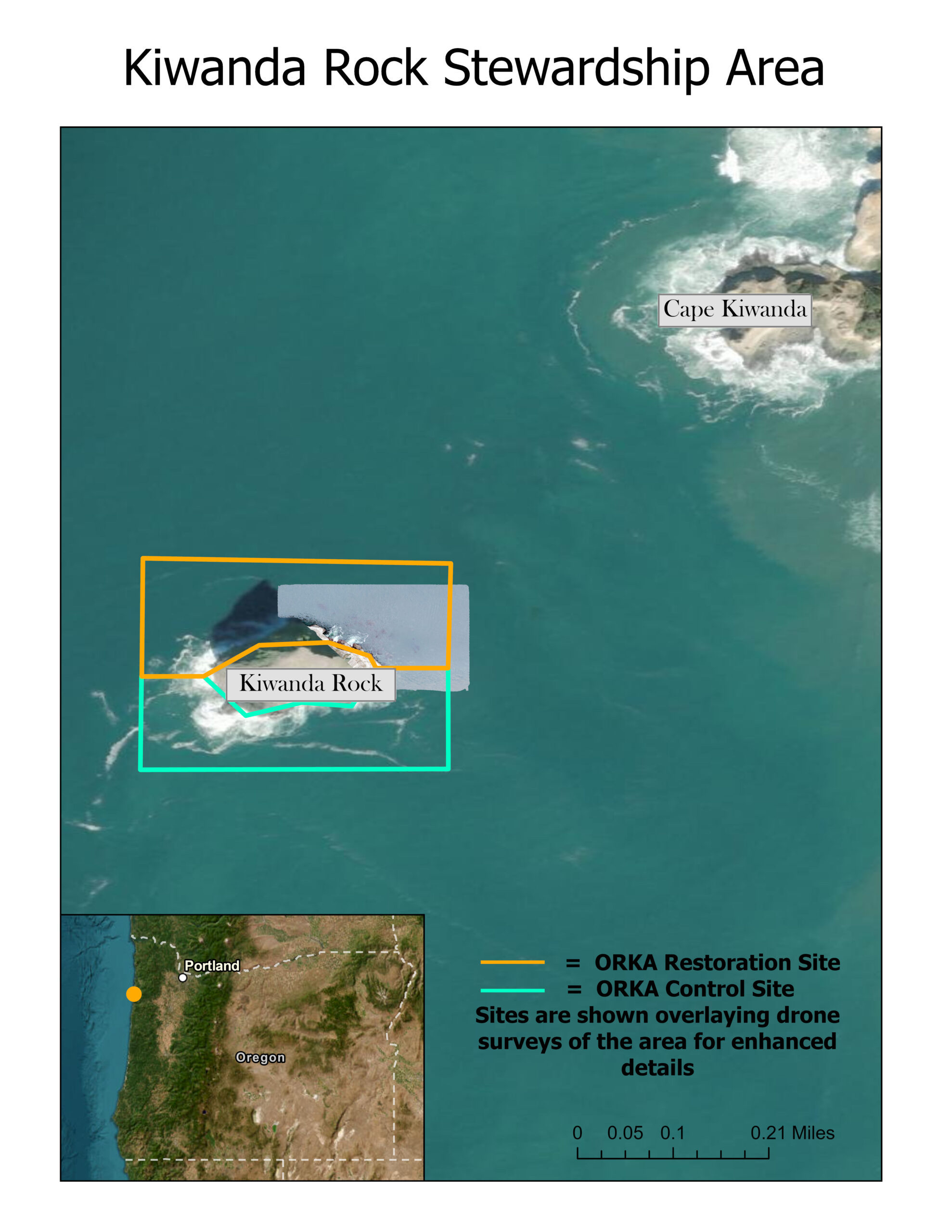
Kiwanda Rock
- Purples culled this year: 16200
- Reds culled this year: 36
- Total culled this year: 16236
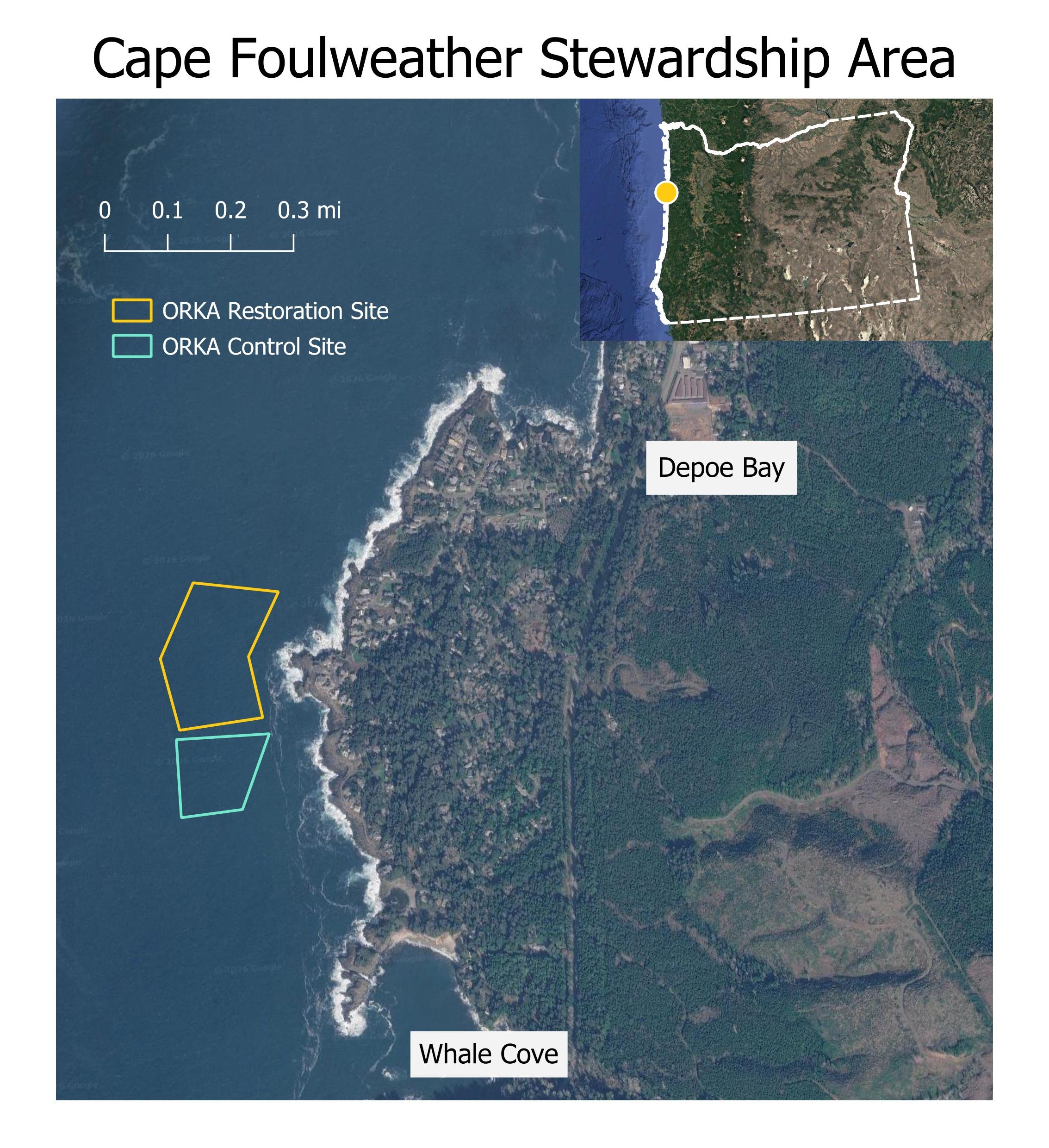
Cape Foulweather
- Purples culled this year: 12000
- Reds culled this year: 120
- Total culled this year: 12120
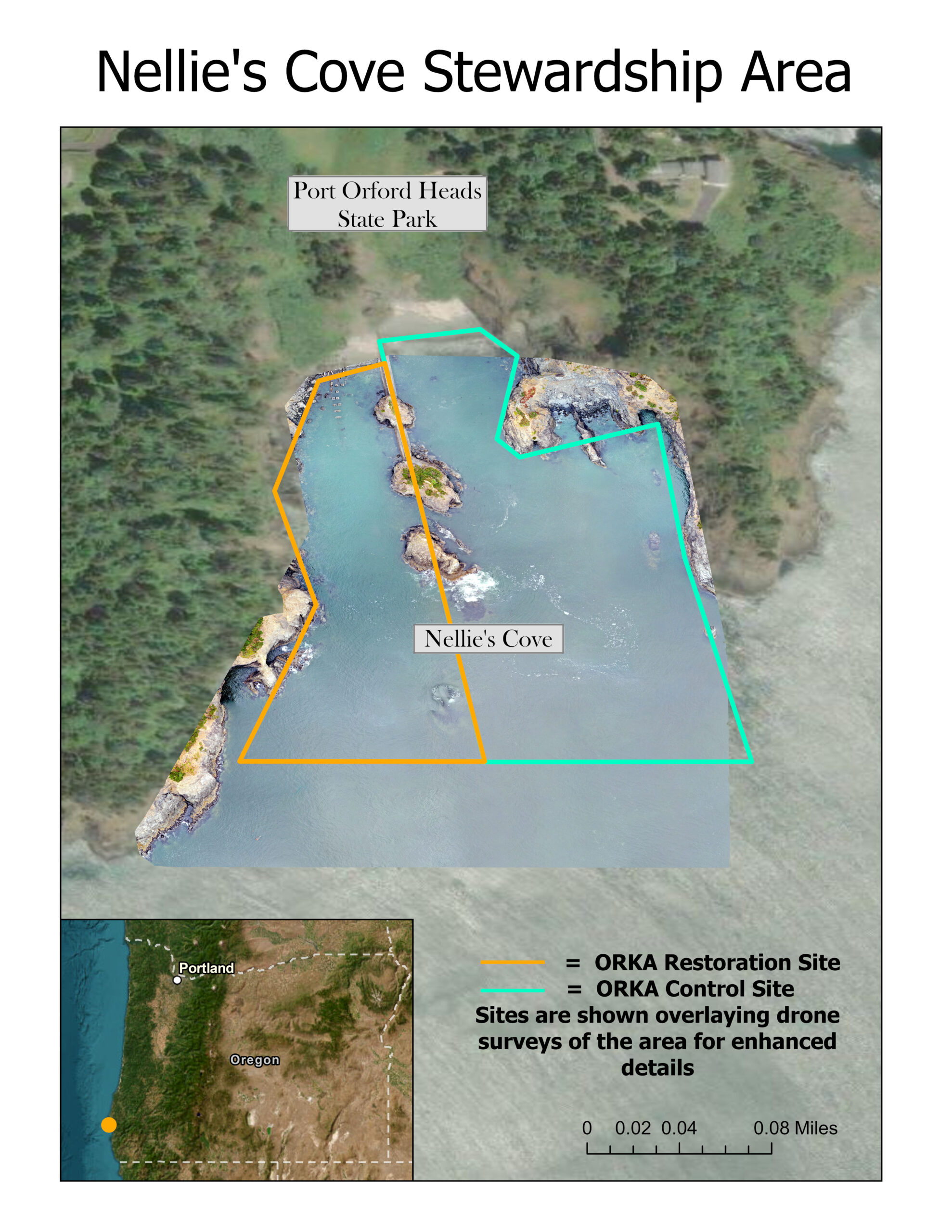
Nellie's Cove
- Purples culled this year: 299260
- Reds culled this year: 12772
- Total culled this year: 312032
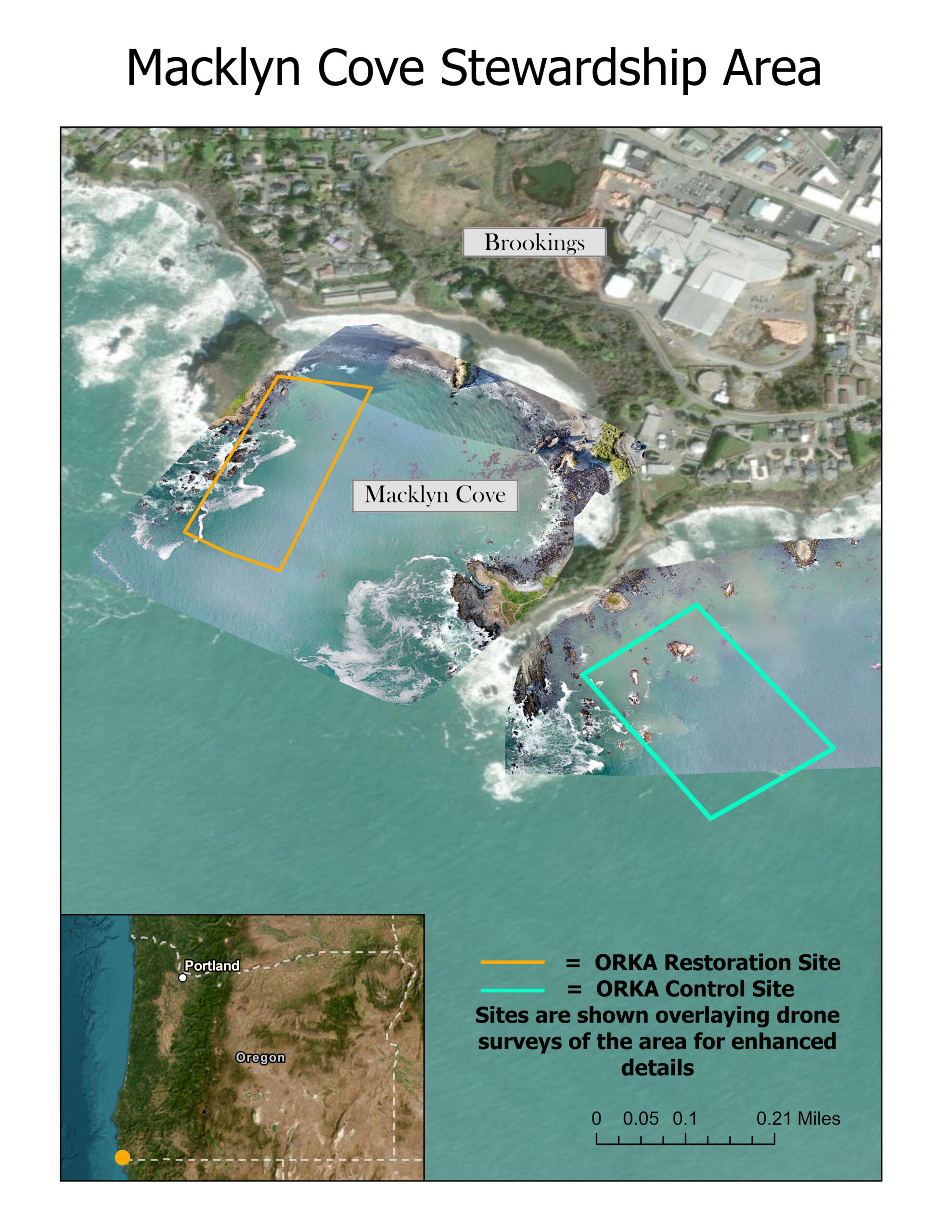
Macklyn Cove
- Purples culled this year: 22000
- Reds culled this year: 39
- Total culled this year: 22039
Urchin culling:
ORKA conducts urchin culling work with permission from Oregon Department of Fish and Wildlife (ODFW) under a Letter of Authorization (LOA) system. This allows ODFW to track how many urchins are being culled, when and where it is occurring, and who is doing the work. We work with commercial and volunteer divers to cull urchins in our restoration sites.
Anticipated results of culling:
- To date, we’ve culled over 600,000 urchins have been culled across five active restoration sites (South Cove is slated for work in 2027). In Nellie’s Cove and Macklyn Cove, this culling effort has coincided with the return of some kelp forest habitat, showing promising signs of the effectiveness of this approach in the short term.
- In addition to culling urchins, ORKA coordinates site monitoring and kelp enhancement work to understand the impacts we are having, and give kelp a fresh start without hungry urchins.