As ORKA moves into our second season using elevated platforms, known as ARKEVs, Arrays to Recover Kelp Ecosystem Vegetation, to help restore kelp forest habitats, we look back to our first season and assess how things went. We’ve come to a few conclusions –
- ARKEVs are effective to use on Oregon’s coast – they withstood the powerful wave and current environment of the coast, proving they can handle conditions here during the growing season from May – September.
- Kelp attached to ARKEVs attract fish – the presence of kelp, even in small restoration areas, acts as supplemental habitat for fish, especially juvenile rockfish fish.
- ARKEVs support kelp production of reproductive material – sori that grew on the kelp succeeded in producing abundant reproductive material in Nellie’s Cove, one of our restoration sites.

With that in mind, it’s clear that the technique worked in our use case. Now it’s time to refine the design to fit our specific needs. That means growing more kelp, in more places, using less plastic. So as we look forward to the coming field season and consider how to improve upon the technique, we have a few goals this time around.
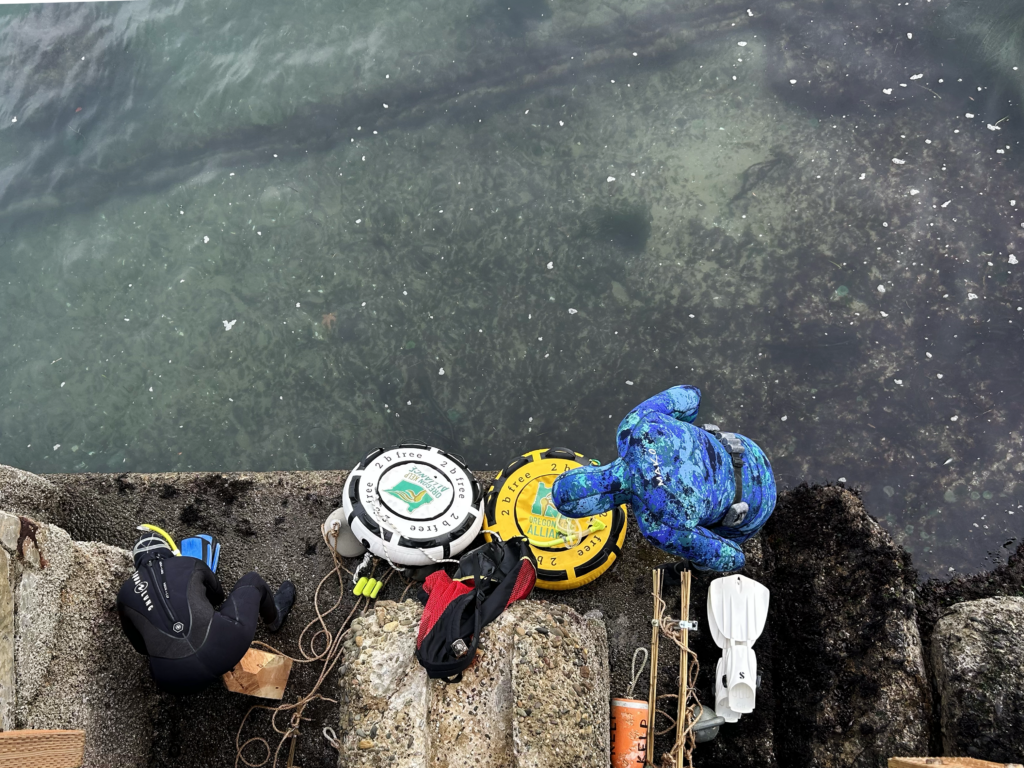
- Using more platforms at more sites along the coast – we will expand to two additional sites, and will deploy more platforms than last year. This means increased planning and coordination in the field to get the work done at multiple field sites.
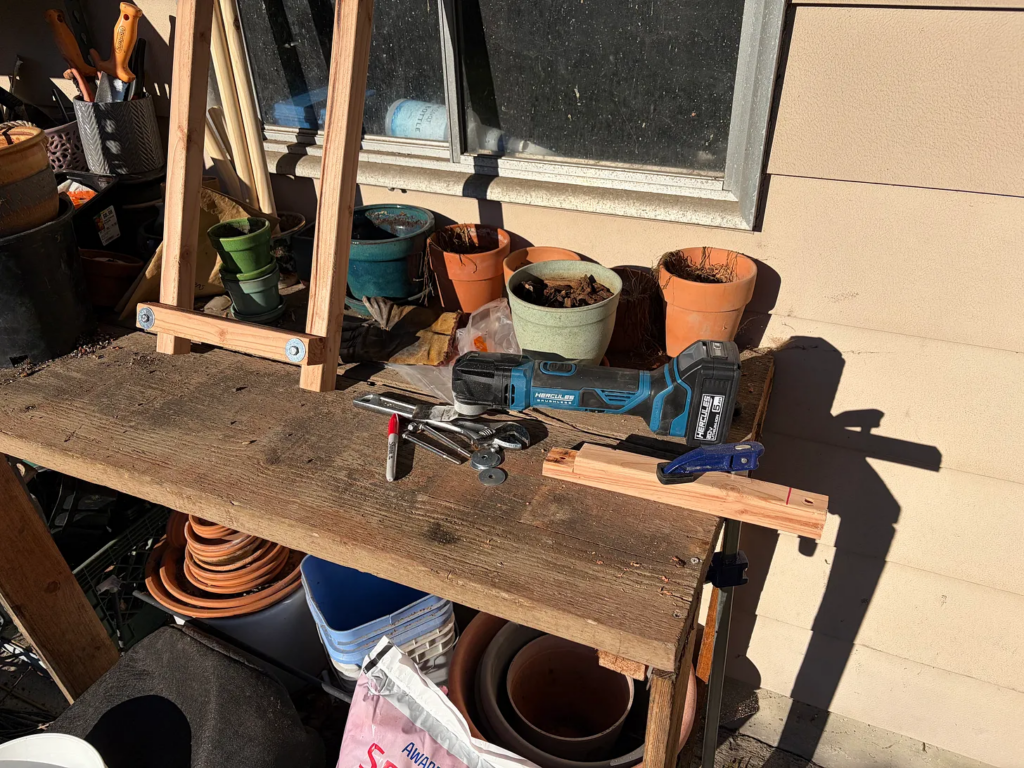
- Building ARKEVs with less plastic, and improving production efficiency and cost – we have successfully prototyped wooden platforms instead of PVC, and Manila line in place of nylon. Doing so allows us to produce more ARKEVs, with less steps, for reduced cost.
- Getting more kelp to grow and produce more reproductive material – we plan to take advantage of natural kelp recruitment to seed lines on the ARKEVs. This will allow us to source kelplings more efficiently and give them a head start.
- Planning deployments and monitoring to learn how to further improve results – we aim to design ARKEV sizes and deployment locations to allow for more effective monitoring and data collection on survival, growth rates, reproductive output.
Now, we’ve brainstormed and experimented with new materials and designs to meet our goals this year. We prototyped new designs made of bamboo and wood in the field to see how they might handle our restoration work. After a few weeks in the field, the wooden design came forward as the best approach as it is cost effective, easy to assemble and deploy, and maintains its integrity and buoyancy when deployed.
This process of experimenting, collecting data, and adapting our restoration techniques is central to ORKA’s goal of restoring kelp forest ecosystem habitats. What started as a novel restoration technique from partners in California, then went through testing and observations in the field, has now turned into one of ORKA’s kelp enhancement tools. With initial results from the prototype, it’s time to plan the kelp enhancement portion of the field season and consider the size and scope of this year’s restoration work. Stay tuned for more updates as we get closer to field season!